
ND Prescribed Fire Program for Rangeland Health Outdoor Heritage Fund

The grasslands were formed by disturbance. Grazing by large herbivores (bison), large scale fires, and extreme weather patterns (drought, low precipitation averages, high wind events) create the perfect environment for our prairie ecosystem. Generations of humans have been drawn to the great plains for hunting opportunities and agricultural uses. Current uses of the grasslands such as livestock production, tourism (which includes hunting, biking, hiking, horseback riding, etc…) rely on best management practices by those who manage the public, tribal, and private lands. Prescribed burning has benefits for livestock and wildlife.
Prescribed burning has been shown to improve nutritional value and consumption of rangeland plants. Protein content and digestibility of plants are enhanced by a prescribed burn. Forage quantity, quality, height, and density increase with prescribed burns.
Animal performance improves in a number of ways with a prescribed burn. North Dakota State University (NDSU) studies have shown increases in stocker cattle weight gains, cow body condition scores, and increases in calf weaning weights. Another benefit is the reduction in tick and horn fly populations after prescribed burning.
We all know that prescribed burns can prevent large scale wildfires and make them less severe by reducing fuel loadings and volatile fuels such as Rocky Mountain Juniper, but this also benefits our rangelands. Reduction of woody encroachment species increases your palatable forage species, improve water quality and infiltration of water on rangeland. Some shrubs, such as snowberry/ buckbrush, will resprout and become palatable to wildlife and livestock. The animals will then eat the plant and control the spread of those shrubs.
To increase the use of prescribed burning for rangeland improvements, support for this practice is needed in ND with training, laws, and forming Prescribed Burn Associations (PBAs). This will create a better understanding of the benefits of proactive fire management instead of reactive management during wildfire.
North Dakota Wildlife Federation (NDWF) received a North Dakota Outdoor Heritage Fund (OHF) grant to create a ND Prescribed Fire Program (NDPFP). The program is for working lands where livestock is being used to manage the land. Landowners who are interested in implementing prescribed burns are helped by the program paying for writing burn plans and implementing prescribed burns. The landowner must prepare the designated burn unit according to the burn plan as their in-kind match. The landowner must also be present for the burn and if not already trained must attend a prescribed burn training in person or online.
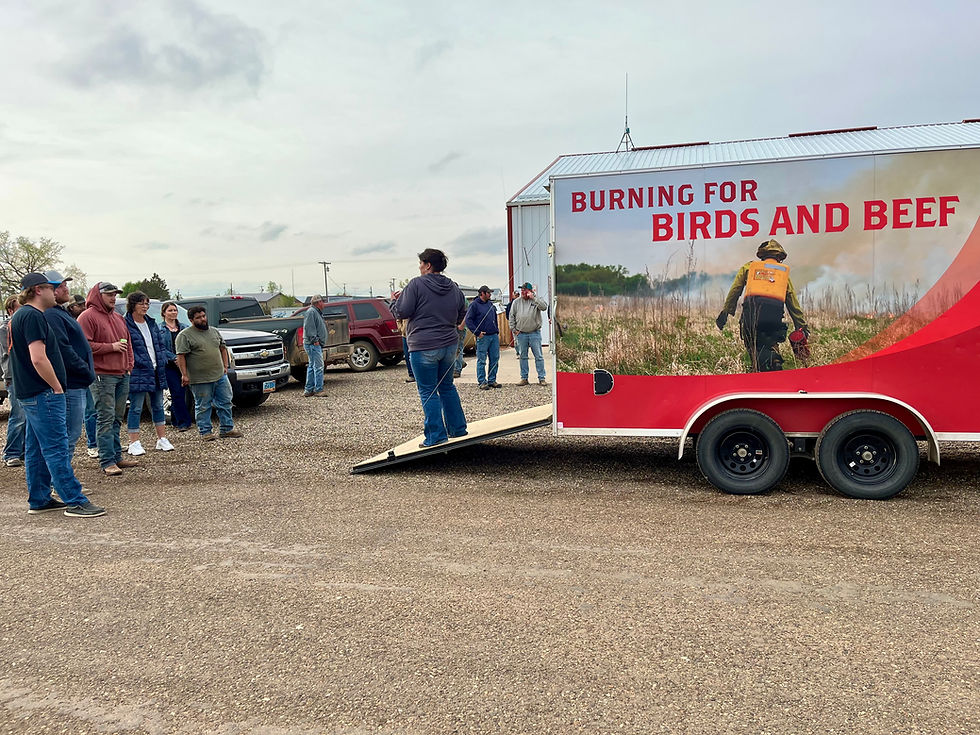
Since September of 2024, 12 landowners have signed up for 3221 acres in 10 North Dakota counties. Some landowners are using contractors, and some are working with local fire departments. 15 total burn plans have been written and 5 of the plans were paid for by the OHF grant. The other plans have been written by NDWF staff, Pheasants Forever staff, The Nature Conservancy staff, and Natural Resource Conservation Services staff. Kelli Kuska, Pheasants Forever Prescribed Fire Coordinator, and Cara Greger, NDWF Western ND Conservation Coordinator, designed and held trainings at Medora, Bismarck, Park River and Kindred in March 2025. On May 14, 2025, the training was held for the Golva Volunteer Fire Department. In February and March 2026, training sessions were held in Carson, Napoleon, and Beach. A total of 213 participants attended the trainings. Two Prescribed Burn Associations (PBAs) are being formed from work done by Kelli Kuska. Volunteer work days have been organized to get people out helping landowners prepare for their prescribed burns. In Billings County, volunteers worked for a landowner cutting down Rocky Mountain juniper, sage, and mowing breaks to secure the firelines for the proposed burn.
The OHF NDPFP is continuing to reach out to interested landowners and partners. The weather is monitored to see if burns can be conducted to meet the goals of the burn plan. NDWF staff will document the results with videos and pictures and checking in with landowners to assess the success of the burn. This will be done with a survey that NDSU has developed. Follow up training will be held to help those who attended trainings to gather together to plan the next burn season. During the follow up meetings, questions can be answered, coordination can happen between those who want the experience or can help others to achieve their management goals. If North Dakota can follow the role model states such as Nebraska, Oklahoma, South Dakota, and Kansas to start forming PBAs, then organizations like PF and NDWF can help support those grassroots associations manage for improved habitat and better defense against wildfire situations.
To learn more about the North Dakota Prescribed Fire Program or to sign up for the program contact Cara Greger, NDWF Western Conservation Coordinator at cgreger.ndwf@gmail.com or call 320-808-4897. For more information check out the website https://www.northdakotawildlife.org/prescribed-fire



This is an interesting article about the importance of prescribed fire for maintaining healthy rangelands and supporting local wildlife. Proper land management can make a significant difference in protecting natural areas and improving long-term land health. It is also useful to learn how different management practices can support both the environment and communities. For those interested in property management and related services, you can read more about the available options.
Prescribed fire is a great example of how proactive land management can benefit both wildlife and working lands. The ND Prescribed Fire Program is doing valuable work by supporting landowners with training, burn planning, and safer fire practices. With 213 participants already trained, this kind of collaboration can make a real difference in rangeland health and wildfire preparedness. A strong foundation in fire safety is essential; every landowner and volunteer involved should consider a fire safety certificate as part of their training journey.